
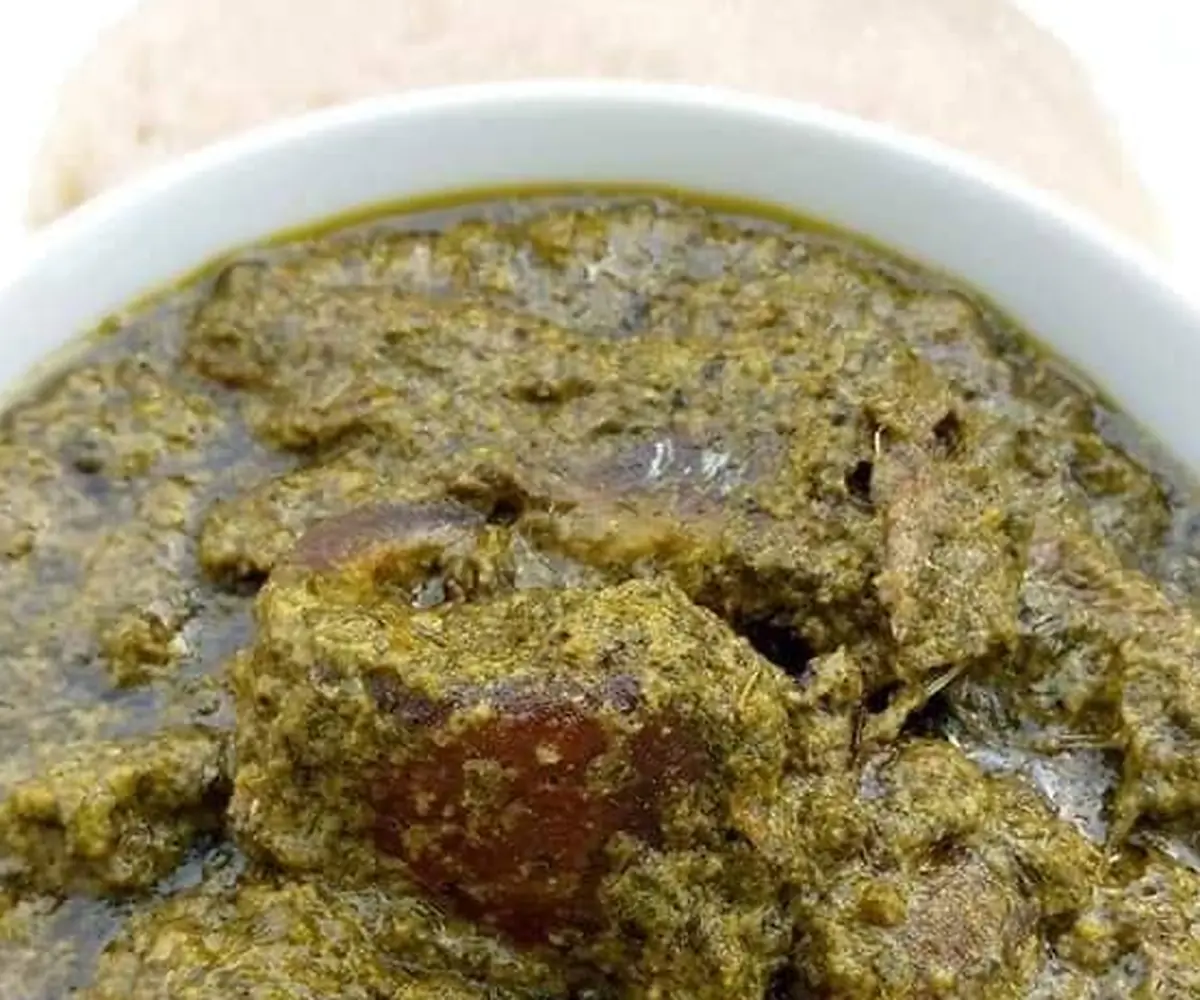
Quick answer
Kpem: Pounded cassava leaves cooked in palm nut juice. Cameroon’s East region (capital Bertoua) is home to this dish. Allow about 110 minutes for 6 people; difficulty: medium. It is served with cassava sticks or cassava fufu.
Key facts
- Region
- East · Bertoua
- Time
- 110 min
- Difficulty
- Medium
- Servings
- 6
- Served with
- cassava sticks or cassava fufu
- When
- family meals
Where does Kpem come from?
Kpem (or kwem) is a dish from the East made from pounded cassava leaves cooked slowly in palm nut juice. This old dish is found, under other names (saka-saka, pondu), all over Central Africa.
Other signature dishes of the East region: Okra soup & cassava fufu.
What are the ingredients for Kpem?
For 6 people:
- Pounded cassava leaves
- Palm nut cream
- Cassava sticks
- Smoked fish (optional) (buy locally)
How do you make Kpem? Step-by-step recipe
- Thaw the pounded cassava leaves and boil 30 min; drain.
- Bring the palm nut cream to the boil with water.
- Add the leaves and simmer 1 h until the oil rises.
- Season with salt and chili and add the smoked fish.
- Serve with cassava sticks.
Tips for a perfect Kpem
- Boil the leaves once first to remove bitterness.
- Simmer for at least an hour: the oil should rise.
- Smoked fish is its ideal partner.
What to serve with Kpem
Traditionally it is served with cassava sticks or cassava fufu. It is a dish for family meals.
Where to buy Kpem ingredients in Europe and North America
Outside Cameroon, the dry and frozen ingredients for Kpem are often hard to find. Our kit gathers them, checked and packed in Douala, and delivers them across Europe, the UK, the US and Canada, including Paris, Brussels, London, Montreal.
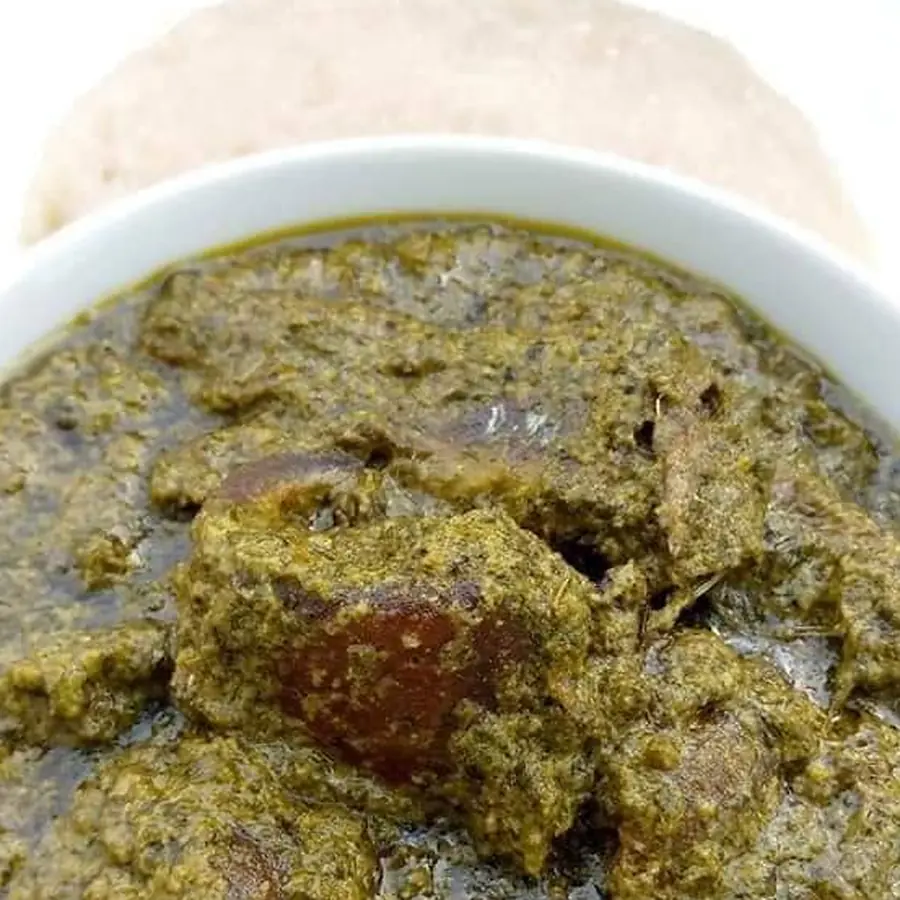
Frequently asked questions
What is Kpem?
Pounded cassava leaves cooked in palm nut juice. It comes from Cameroon’s East region.
How long does Kpem take to make?
About 110 minutes for 6 people.
What do you eat Kpem with?
With cassava sticks or cassava fufu.
Can you cook Kpem outside Cameroon?
Yes. Our kit brings together the hard-to-find ingredients; only everyday fresh items need to be bought locally.

